Why Some Trade-In Programs Generate More Customer Complaints Than Others

A customer walks into your store with a smartphone expecting to receive a fair trade-in offer.
The device looks almost new.
The screen is clean.
It powers on without any issues.
But after inspection, the offer comes back significantly lower than expected.
The customer is frustrated.
They believe the device was undervalued.
Your staff insists the price is correct.
Neither side feels confident about the outcome.
This situation happens every day across the second-hand smartphone industry.
And while customers often blame pricing, the real problem usually begins much earlier.
It starts with transparency.
The most successful trade-in programs are not simply the ones offering the highest prices. They are the ones that consistently explain why a device is worth a particular amount.
When customers understand the evaluation process, they are far less likely to question the outcome.
Customer Complaints Usually Begin With Uncertainty
Most customers are realistic.
They know a used smartphone will not be worth its original purchase price.
What they struggle with is uncertainty.
Questions like these often create complaints:
- Why was my phone graded lower than expected?
- What issue reduced its value?
- How was the final price calculated?
- Was every feature actually tested?
- Could another store offer a different value?
If the business cannot answer these questions with evidence, trust quickly disappears.
The issue is rarely the number itself.
It is the lack of transparency behind it.
Why Device Valuation Is More Complex Than It Appears
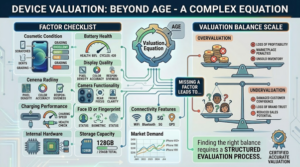
A smartphone’s value depends on much more than its age.
Professional evaluators typically consider factors such as:
- Cosmetic condition
- Battery health
- Display quality
- Camera functionality
- Charging performance
- Face ID or fingerprint authentication
- Connectivity features
- Internal hardware
- Storage capacity
- Market demand
Missing even one issue can lead to inaccurate pricing.
Overvaluing devices hurts profitability.
Undervaluing them damages customer confidence.
Finding the right balance requires a structured evaluation process.
Where Trade-In Programs Often Go Wrong
Many complaints can be traced back to one of four operational problems.
1. Inconsistent Device Evaluation
When two employees inspect the same phone and reach different conclusions, customers naturally lose confidence.
Subjective grading creates inconsistent offers.
The same device should receive the same evaluation regardless of who performs the inspection.
Without standardized processes, consistency becomes difficult to maintain.
2. Limited Testing
Some evaluations focus primarily on cosmetic condition.
While appearance matters, hidden issues often affect resale value much more than visible scratches.
Problems involving batteries, cameras, sensors, microphones, charging systems, or wireless connectivity may go unnoticed without proper testing.
Incomplete evaluations increase pricing errors.
3. Poor Communication
Customers generally accept lower offers when they understand the reasons.
They become frustrated when businesses simply present a number without supporting information.
Showing customers what was tested and how the final value was determined creates far greater confidence.
4. Lack of Documentation
Verbal explanations are easily forgotten.
Documented inspection results provide evidence.
They also help customer service teams resolve disputes more efficiently if questions arise later.
Transparency Builds Trust
Transparency is one of the strongest competitive advantages a trade-in business can develop.
Customers want confidence that every device is evaluated fairly.
This means explaining:
- What was inspected
- What issues were identified
- How those issues affected value
- What grading standards were used
When evaluation criteria are clear, pricing becomes easier to understand.
That transparency often reduces complaints before they happen.
Technology Is Helping Standardize Trade-In Evaluations
Many high-volume businesses now rely on mobile phone trade-in software to create a more consistent evaluation process.
Rather than depending entirely on manual inspections, modern platforms combine diagnostics, grading, documentation, and pricing workflows into a standardized system.
The objective is not simply automation.
It is consistency.
Standardized evaluations help ensure that similar devices receive similar outcomes regardless of who performs the inspection.

Manual Processes Create Variability
Manual evaluations remain valuable.
Experienced technicians can identify unusual defects and review edge cases.
However, manual processes naturally introduce variation.
Factors such as:
- Experience
- Training
- Fatigue
- Time pressure
- Lighting conditions
can all influence inspection quality.
As trade-in volumes increase, maintaining consistency becomes increasingly difficult.
Technology helps reduce these variables by supporting repeatable workflows.
The Link Between Diagnostics, Grading, and Pricing
A reliable trade-in process is built on three connected steps.
Diagnostics
The device is tested to verify hardware and software functionality.
For businesses that also evaluate Apple devices, diagnosing display-related issues before assigning a trade-in value is equally important. Common problems like screen flickering can significantly affect both usability and resale value, so having reliable solutions for Mac systems helps technicians identify issues accurately before completing the evaluation.
Grading
Cosmetic condition is evaluated using standardized criteria.
Pricing
The final value reflects the combined results of diagnostics, grading, and current market demand.
If any of these stages is inconsistent, pricing becomes inconsistent as well.
That inconsistency often leads directly to customer complaints.
Manual Evaluation vs Standardized Evaluation
| Factor | Manual Evaluation | Standardized Evaluation |
| Inspection Consistency | Varies by employee | Repeatable |
| Documentation | Often limited | Detailed |
| Pricing Accuracy | More variable | More consistent |
| Customer Transparency | Depends on staff | Structured |
| Scalability | Limited | High |
| Dispute Resolution | More difficult | Better supported |
This comparison highlights why many organizations continue investing in standardized workflows.
The goal is not to remove human expertise.
It is to make every evaluation more predictable.
Why Accurate Valuation Benefits Everyone
Better evaluations create value across the entire business.
Customers
Customers receive clearer explanations and greater confidence in pricing.
Retailers
Fewer complaints reduce customer service costs.
Trade-In Operators
More consistent valuations improve operational efficiency.
Refurbishers
Higher-quality incoming inventory supports better resale performance.
Buyers
Reliable grading helps align expectations with actual device condition.
When every stakeholder benefits, trust grows throughout the supply chain.
Building a Better Trade-In Experience
Improving customer satisfaction does not always require offering higher prices.
It requires offering better explanations.
Businesses should focus on:
- Standardized inspections
- Consistent grading
- Comprehensive diagnostics
- Transparent documentation
- Clear communication
These improvements help customers understand how decisions are made.
And understanding reduces disputes.
Looking Ahead
Trade-in programs will continue growing as consumers upgrade devices more frequently and businesses expand circular economy initiatives.
With that growth comes higher customer expectations.
People increasingly expect accurate valuations backed by evidence rather than estimates.
Businesses that invest in transparent evaluation processes will be better positioned to earn customer trust and reduce unnecessary complaints.
At the end of the day, customers are not simply selling a phone.
They are deciding whether they trust the process.
That trust is earned through consistency, transparency, and accurate evaluation.
Frequently Asked Questions
Why do customers complain about trade-in offers?
Most complaints stem from unclear pricing, inconsistent evaluations, or a lack of transparency about how the device was assessed.
What affects a smartphone’s trade-in value?
Factors include cosmetic condition, battery health, hardware functionality, storage capacity, market demand, and overall device condition.
How can businesses reduce trade-in disputes?
Using standardized diagnostics, consistent grading, detailed documentation, and transparent communication helps reduce disagreements.
Does automated evaluation replace employees?
No. Automation supports consistency and documentation while employees continue handling customer interactions and complex evaluations.
Why is documentation important in trade-in programs?
Documented inspection results provide evidence that supports pricing decisions and helps resolve disputes more efficiently.


